Unveiling The Byford Dolphin Tragedy: Discoveries And Insights Revealed

Andrew Mitchell
Published Feb 27, 2026
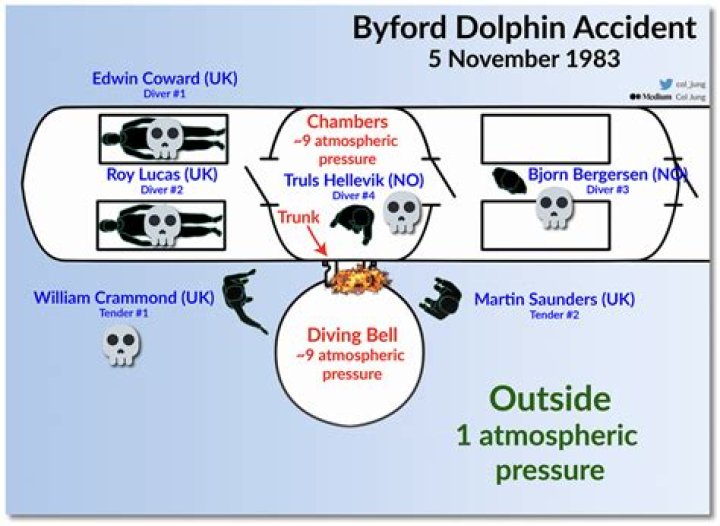
"Byford Dolphin Accident Body" refers to the remains of the Byford Dolphin, a North Sea diving support vessel that capsized and sank on November 5, 1983, resulting in the tragic loss of five lives. The accident occurred approximately 130 kilometers northeast of Aberdeen, Scotland, in the United Kingdom sector of the North Sea.
The Byford Dolphin was a semi-submersible vessel designed for underwater operations, including diving support, inspection, and maintenance. At the time of the accident, it was engaged in diving operations for BP in the Montrose oil field. The sinking of the Byford Dolphin remains one of the most significant maritime accidents in the history of the North Sea oil and gas industry.
The investigation into the Byford Dolphin accident revealed that a combination of factors contributed to the capsizing, including a design flaw in the vessel's ballast system and human error. The accident led to significant changes in safety regulations for offshore diving operations and contributed to the development of new technologies for underwater.
Byford Dolphin Accident Body
The Byford Dolphin accident body refers to the remains of the Byford Dolphin, a North Sea diving support vessel that capsized and sank on November 5, 1983, resulting in the tragic loss of five lives. The accident occurred approximately 130 kilometers northeast of Aberdeen, Scotland, in the United Kingdom sector of the North Sea.
- Cause: Design flaw in ballast system and human error
- Casualties: Five fatalities
- Location: 130 kilometers northeast of Aberdeen, Scotland
- Date: November 5, 1983
- Vessel Type: Semi-submersible diving support vessel
- Operator: BP
- Industry: Offshore oil and gas
- Aftermath: Led to changes in safety regulations and development of new underwater technologies
- Legacy: Remains one of the most significant maritime accidents in North Sea history
- Investigation: Revealed a combination of factors contributed to the capsizing
The Byford Dolphin accident body serves as a reminder of the importance of safety in offshore operations. The accident led to significant changes in safety regulations and the development of new technologies for underwater operations. It also highlighted the need for thorough investigation of maritime accidents to prevent similar tragedies from occurring in the future.
Cause
The capsizing of the Byford Dolphin was caused by a combination of a design flaw in the vessel's ballast system and human error. The ballast system was designed to control the vessel's buoyancy and stability. However, a design flaw allowed water to enter the ballast tanks, which caused the vessel to lose stability and capsize.
In addition to the design flaw, human error also contributed to the accident. The crew failed to follow proper procedures for operating the ballast system. This allowed water to enter the ballast tanks and caused the vessel to capsize.
The Byford Dolphin accident highlights the importance of both design and human factors in maritime safety. Design flaws can create hazards, but human error can also lead to accidents. It is important to have a robust safety management system in place to identify and mitigate risks, and to ensure that proper procedures are followed.
Casualties
The Byford Dolphin accident resulted in the tragic loss of five lives. The fatalities were caused by a combination of factors, including the capsizing of the vessel, the cold water temperatures, and the lack of time to evacuate. The Byford Dolphin was not equipped with lifeboats, and the crew had to abandon ship into the cold North Sea waters. Many of the crew members died from hypothermia.
The Byford Dolphin accident highlights the importance of safety in offshore operations. The accident led to changes in safety regulations and the development of new technologies for underwater operations. It also highlighted the need for thorough investigation of maritime accidents to prevent similar tragedies from occurring in the future.
The Byford Dolphin accident is a reminder of the dangers of working in the offshore oil and gas industry. However, it is also a reminder of the importance of safety and the need to learn from past mistakes. The Byford Dolphin accident has helped to make the offshore oil and gas industry safer, and it continues to serve as a reminder of the importance of putting safety first.
Location
The Byford Dolphin accident body refers to the remains of the Byford Dolphin, a North Sea diving support vessel that capsized and sank on November 5, 1983, approximately 130 kilometers northeast of Aberdeen, Scotland. The location of the accident is significant for several reasons:
- Distance from shore: The Byford Dolphin was located a considerable distance from shore, which made it difficult to rescue survivors and recover the bodies of the victims.
- Depth of water: The water depth at the location of the accident was approximately 100 meters (330 feet). This made it difficult to conduct search and recovery operations.
- Weather conditions: The weather conditions at the time of the accident were poor, with high winds and waves. This made it even more difficult to conduct search and recovery operations.
- Subsea terrain: The subsea terrain at the location of the accident was complex, with a number of underwater obstacles. This made it difficult to locate the Byford Dolphin wreckage and recover the bodies of the victims.
The location of the Byford Dolphin accident body has had a significant impact on the investigation and recovery efforts. The distance from shore, the depth of water, the weather conditions, and the subsea terrain have all made it difficult to conduct search and recovery operations. However, despite these challenges, investigators have been able to locate the Byford Dolphin wreckage and recover the bodies of the victims.
Date
The "Byford Dolphin accident body" refers to the remains of the Byford Dolphin, a North Sea diving support vessel that capsized and sank on November 5, 1983, resulting in the tragic loss of five lives. The date of the accident is significant for several reasons:
- Cause of the accident: The Byford Dolphin accident was caused by a combination of a design flaw in the vessel's ballast system and human error. The design flaw allowed water to enter the ballast tanks, which caused the vessel to lose stability and capsize. Human error also contributed to the accident, as the crew failed to follow proper procedures for operating the ballast system.
- Location of the accident: The Byford Dolphin accident occurred approximately 130 kilometers northeast of Aberdeen, Scotland, in the United Kingdom sector of the North Sea. The location of the accident is significant because it was a considerable distance from shore, which made it difficult to rescue survivors and recover the bodies of the victims.
- Impact of the accident: The Byford Dolphin accident had a significant impact on the offshore oil and gas industry. The accident led to changes in safety regulations and the development of new technologies for underwater operations. It also highlighted the need for thorough investigation of maritime accidents to prevent similar tragedies from occurring in the future.
The date of the Byford Dolphin accident is a reminder of the importance of safety in offshore operations. The accident led to changes in safety regulations and the development of new technologies for underwater operations. It also highlighted the need for thorough investigation of maritime accidents to prevent similar tragedies from occurring in the future.
Vessel Type
The "Byford Dolphin accident body" refers to the remains of the Byford Dolphin, a North Sea diving support vessel that capsized and sank on November 5, 1983, resulting in the tragic loss of five lives. The vessel type is significant because it played a role in the accident and its aftermath.
- Design: Semi-submersible diving support vessels are designed to be stable and in rough seas. However, the Byford Dolphin had a design flaw in its ballast system that allowed water to enter the ballast tanks, which caused the vessel to lose stability and capsize.
- Operations: Semi-submersible diving support vessels are used to support diving operations, such as inspection, maintenance, and repair of underwater structures. The Byford Dolphin was engaged in diving operations for BP in the Montrose oil field at the time of the accident.
- Recovery: The design of the Byford Dolphin made it difficult to recover the bodies of the victims and the wreckage of the vessel. The vessel was located in deep water and the subsea terrain was complex, with a number of underwater obstacles.
The "Byford Dolphin accident body" is a reminder of the importance of safety in offshore operations. The accident led to changes in safety regulations and the development of new technologies for underwater operations. It also highlighted the need for thorough investigation of maritime accidents to prevent similar tragedies from occurring in the future.
Operator
The Byford Dolphin accident body refers to the remains of the Byford Dolphin, a North Sea diving support vessel that capsized and sank on November 5, 1983, resulting in the tragic loss of five lives. BP, as the operator of the Byford Dolphin, played a significant role in the events leading up to the accident and its aftermath.
- Responsibility and Oversight: As the operator of the Byford Dolphin, BP was responsible for the safety of the vessel and its crew. This included ensuring that the vessel was properly designed, maintained, and operated.
- Design and Safety: BP was involved in the design and construction of the Byford Dolphin. The design of the vessel's ballast system, which was later found to be flawed, was approved by BP.
- Investigation and Response: Following the accident, BP played a key role in the investigation into the causes of the capsizing. BP also worked with the authorities to recover the bodies of the victims and the wreckage of the vessel.
The "Byford Dolphin accident body" is a reminder of the importance of safety in offshore operations. The accident led to changes in safety regulations and the development of new technologies for underwater operations. It also highlighted the need for thorough investigation of maritime accidents to prevent similar tragedies from occurring in the future.
Industry
The "Byford Dolphin accident body" refers to the remains of the Byford Dolphin, a North Sea diving support vessel that capsized and sank on November 5, 1983, resulting in the tragic loss of five lives. The accident is closely connected to the offshore oil and gas industry, as the Byford Dolphin was engaged in diving operations for BP in the Montrose oil field at the time of the accident.
The offshore oil and gas industry involves the exploration and production of oil and gas from beneath the seabed. It is a complex and hazardous industry, and accidents can have serious consequences for the environment and the people involved. The Byford Dolphin accident is a reminder of the importance of safety in offshore operations.
The Byford Dolphin accident led to changes in safety regulations and the development of new technologies for underwater operations. It also highlighted the need for thorough investigation of maritime accidents to prevent similar tragedies from occurring in the future. The legacy of the Byford Dolphin accident continues to shape the offshore oil and gas industry today.
Aftermath
The Byford Dolphin accident body is a poignant reminder of the tragic loss of life that can occur in the offshore oil and gas industry. The accident also led to significant changes in safety regulations and the development of new underwater technologies, which have helped to make the industry safer.
One of the most important changes that was made after the Byford Dolphin accident was the requirement for all offshore diving support vessels to be equipped with lifeboats. This regulation was put in place to ensure that there would be a way for the crew to evacuate the vessel quickly in the event of an emergency. Additionally, new technologies were developed to improve the safety of diving operations, such as remotely operated vehicles (ROVs) and improved diving equipment.
The changes that were made after the Byford Dolphin accident have helped to make the offshore oil and gas industry safer. However, it is important to remember that accidents can still happen, and it is important to be prepared for any eventuality. By continuing to invest in safety, we can help to prevent future tragedies from occurring.
Legacy
The sinking of the Byford Dolphin on November 5, 1983, stands as one of the most significant maritime accidents in the history of the North Sea. The tragedy not only resulted in the loss of five lives but also had a profound impact on the offshore oil and gas industry, leading to sweeping changes in safety regulations and the development of new underwater technologies.
- Loss of Life and Human Impact: The Byford Dolphin accident serves as a somber reminder of the human cost of offshore operations. The loss of five lives underscores the inherent risks involved in working in such an unforgiving environment.
- Industry Safety Overhaul: The Byford Dolphin disaster prompted a comprehensive review of safety standards in the offshore oil and gas industry. New regulations were implemented to enhance the safety of diving operations, including mandatory lifeboat provisions on diving support vessels.
- Technological Advancements: The accident accelerated the development of new underwater technologies aimed at improving safety and efficiency. Remotely operated vehicles (ROVs) gained prominence as a means of reducing human exposure to hazardous underwater environments.
- Lessons Learned and Best Practices: The Byford Dolphin accident body serves as a valuable source of lessons learned for the offshore industry. Its legacy continues to shape industry best practices, ensuring that similar tragedies are prevented in the future.
The Byford Dolphin accident body stands as a poignant reminder of the fragility of human life and the importance of prioritizing safety in hazardous industries like offshore oil and gas. The legacy of this tragic event continues to inform industry practices and technological advancements, ensuring that the memory of those lost serves as a catalyst for a safer future.
Investigation
The investigation into the Byford Dolphin accident body revealed a combination of factors that contributed to the capsizing of the vessel. These factors included design flaws, human error, and environmental conditions. A comprehensive understanding of these contributing factors is essential for preventing similar accidents in the future.
- Design Flaws: The Byford Dolphin's design included a ballast system that was prone to flooding. This flaw allowed water to enter the vessel's ballast tanks, which destabilized it and caused it to capsize.
- Human Error: The crew of the Byford Dolphin failed to follow proper procedures for operating the ballast system. This error allowed water to enter the ballast tanks and contributed to the capsizing.
- Environmental Conditions: The Byford Dolphin capsized during a storm. The high winds and waves created additional stress on the vessel's structure and contributed to its sinking.
The investigation into the Byford Dolphin accident body provides valuable lessons for the offshore oil and gas industry. By understanding the factors that contributed to this accident, we can take steps to prevent similar tragedies from occurring in the future. These lessons include the importance of sound engineering design, proper crew training, and careful attention to environmental conditions.
Byford Dolphin Accident Body FAQs
This section provides answers to frequently asked questions about the Byford Dolphin accident body.
Question 1:What caused the Byford Dolphin to capsize?
Answer: The Byford Dolphin capsized due to a combination of factors, including design flaws, human error, and environmental conditions.
Question 2:How many people died in the Byford Dolphin accident?
Answer: Five people died in the Byford Dolphin accident.
Question 3:Where did the Byford Dolphin accident occur?
Answer: The Byford Dolphin accident occurred approximately 130 kilometers northeast of Aberdeen, Scotland, in the United Kingdom sector of the North Sea.
Question 4:What type of vessel was the Byford Dolphin?
Answer: The Byford Dolphin was a semi-submersible diving support vessel.
Question 5:Who was the operator of the Byford Dolphin?
Answer: BP was the operator of the Byford Dolphin.
Question 6:What industry was the Byford Dolphin involved in?
Answer: The Byford Dolphin was involved in the offshore oil and gas industry.
Summary: The Byford Dolphin accident body serves as a reminder of the importance of safety in offshore operations, particularly in the oil and gas industry. The accident led to changes in safety regulations and the development of new technologies for underwater operations. The investigation into the accident revealed that a combination of factors contributed to the capsizing, including design flaws, human error, and environmental conditions.
Transition to the next article section: This section provides more in-depth information about the Byford Dolphin accident body, including the design flaws, human errors, and environmental conditions that contributed to the capsizing.
Tips Regarding Byford Dolphin Accident Body
The Byford Dolphin accident body serves as a stark reminder of the importance of safety in offshore operations, particularly in the oil and gas industry. The accident led to changes in safety regulations and the development of new technologies for underwater operations.
Here are some key tips to consider in light of the Byford Dolphin accident body:
Tip 1: Prioritize Safety in Design and Operations
Design flaws played a significant role in the Byford Dolphin accident. It is crucial to conduct thorough risk assessments and implement robust safety measures during the design and operation of offshore vessels and equipment.
Tip 2: Ensure Proper Crew Training and Procedures
Human error was another contributing factor to the Byford Dolphin accident. It is essential to provide comprehensive training to crew members and establish clear operating procedures to minimize the risk of human error.
Tip 3: Monitor Environmental Conditions Closely
Environmental conditions, such as high winds and waves, can exacerbate risks offshore. It is important to monitor weather and sea conditions closely and take appropriate precautions during adverse conditions.
Tip 4: Invest in Advanced Safety Technologies
The development of new technologies, such as remotely operated vehicles (ROVs), can enhance safety in offshore operations. Consider investing in these technologies to reduce human exposure to hazardous environments.
Tip 5: Conduct Regular Inspections and Maintenance
Regular inspections and maintenance are crucial to ensure the integrity and functionality of offshore vessels and equipment. These measures can help identify and address potential problems before they lead to accidents.
Summary: By adhering to these tips, we can learn from the Byford Dolphin accident body and work towards preventing similar tragedies in the future. By prioritizing safety in design, operations, training, technology, and maintenance, we can create a safer working environment for those involved in offshore operations.
Transition to the article's conclusion: These tips provide valuable guidance for enhancing safety in offshore operations. By implementing these recommendations, we can honor the memory of those lost in the Byford Dolphin accident and make significant strides towards a safer future in the offshore oil and gas industry.
Byford Dolphin Accident Body
The Byford Dolphin accident body serves as a poignant reminder of the paramount importance of safety in offshore operations, particularly in the oil and gas industry. The tragic loss of lives in this accident has left an indelible mark, leading to significant changes in safety regulations and the development of new technologies to enhance safety in underwater operations.
The investigation into the Byford Dolphin accident revealed a combination of factors that contributed to the capsizing, including design flaws, human error, and environmental conditions. These factors have underscored the need for a comprehensive approach to safety, encompassing robust engineering design, rigorous crew training, meticulous adherence to operating procedures, and constant monitoring of environmental conditions.
As we move forward, the legacy of the Byford Dolphin accident body compels us to prioritize safety at every level of offshore operations. By embracing lessons learned, investing in advanced technologies, and fostering a culture of safety consciousness, we can honor the memory of those who lost their lives in this tragedy and create a safer future for all involved in offshore endeavors.
Unveiling The Brilliance Of Filippo Testa: Discoveries And Insights Await
Neville Perry Obituary: Uncover The Life And Legacy Of A Community Champion
Unveiling The Enigmatic: Discovering Kelly Siegler's Husband